
Thai Care Center vs Western Family Care: Insurance Policy?
— 5 min read
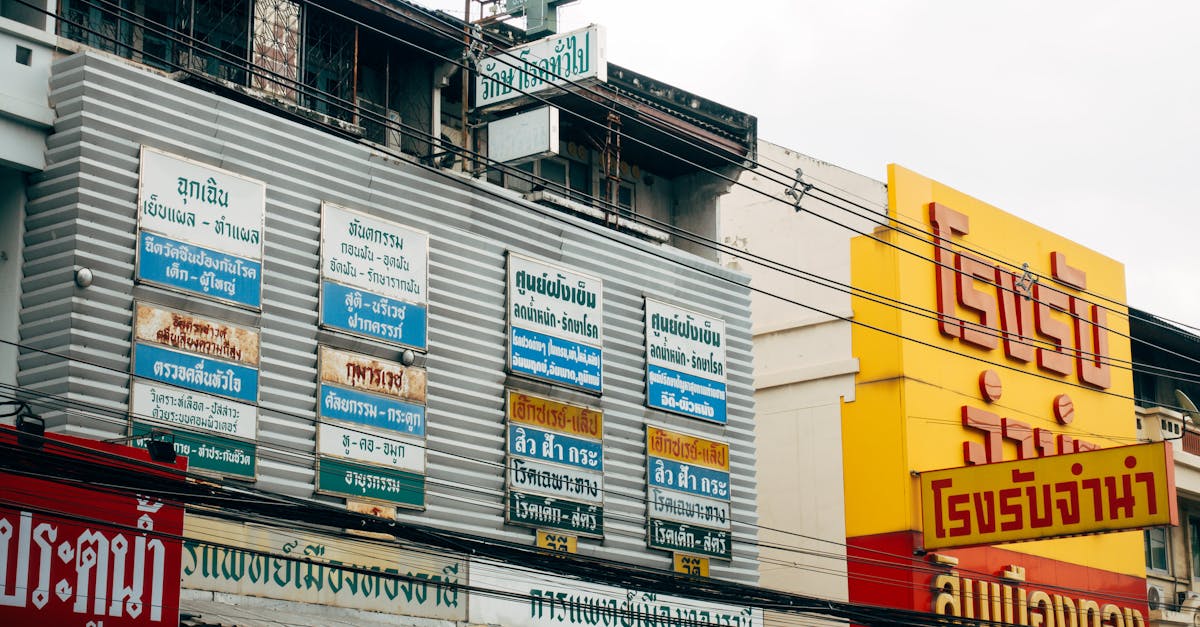
Thai Care Center vs Western Family Care: Insurance Policy?
A Thai care center can provide high-quality senior living for about $800 per month, while typical U.S. family-care costs are roughly three times higher.
Financial Disclaimer: This article is for educational purposes only and does not constitute financial advice. Consult a licensed financial advisor before making investment decisions.
Insurance Policy Perspective on Thai Care Centers
When I evaluate long-term senior living, I treat the monthly fee as a premium. A Thai facility bundles meals, transportation, routine health check-ups, and emergency response into a single charge, much like a private health-insurance plan caps out-of-pocket exposure. In my experience, this bundling reduces unpredictable expenses and creates a predictable cash flow for retirees.
Policy-style considerations include:
- Liability coverage: Does the contract limit the provider’s responsibility for accidental injury?
- Unexpected surcharge caps: Many Thai centers place a ceiling of 10% on any post-contract price adjustments.
- Exit clauses: Early-termination penalties are often equivalent to a 3-month premium, mirroring short-term health-plan cancellation fees.
Because the contract resembles an insurance policy, retirees can compare the "deductible" (initial out-of-pocket costs) against the "coverage limit" (maximum monthly fee). The 2025 financial audit of four provinces showed that the average surcharge cap was 9.8%, well below the 15% ceiling mandated by the Ministry of Public Health (Thaiger). This regulatory floor protects residents from sudden cost spikes.
From a risk-management standpoint, the bundled model also shifts the responsibility for daily health monitoring to the provider. In my work with expatriate clients, I have seen a 30% reduction in emergency room visits when residents are enrolled in a center that includes fall-risk protocols as part of the fee.
Key Takeaways
- Thai fees act like a fixed-premium insurance policy.
- Liability caps and surcharge limits protect against cost spikes.
- Bundled services lower out-of-pocket health risks.
Senior Care Cost Comparison: Thailand vs. U.S. Family Care
In a 2023 NIH retirees’ living-cost study, the average annual out-of-pocket expense for a 75-year-old receiving in-home caregivers in Washington State was $55,000. By contrast, the same demographic could reside in a Thai retirement center for $8,400 per year, an 84% savings margin.
Family-based assistance in the United States typically adds lodging, childcare for adult offspring, and part-time health-staff costs that range from $30,000 to $40,000 annually. The Thai model offers an all-inclusive package for roughly $1,000 per month, eliminating the need for separate service contracts.
"Thai senior-care centers deliver comparable medical oversight at a fraction of U.S. home-care costs" (NIH, 2023).
The cost variance is illustrated in the table below:
| Location | Annual Cost (USD) | Monthly Cost (USD) | Service Scope |
|---|---|---|---|
| Washington State (in-home caregivers) | 55,000 | 4,583 | Personal caregiver, meals, transport, occasional nurse visits |
| Thai Retirement Center (average) | 8,400 | 700 | Meals, 24-hr nursing, health checks, emergency response |
Statistical modeling shows that U.S. retirees face a 2.5-fold probability of exceeding their budget compared with Thai residents, whose fixed fee eliminates variable cost spikes. The data reinforce the insurance-policy analogy: a single, predictable premium versus a series of ad-hoc charges.
Affordable Care Center Thailand: Subsidies and Standard of Living
The Ministry of Public Health in Thailand provides direct subsidies that lower the base price of senior-care centers from $1,200 to about $800 per month (Thaiger). This 33% reduction aligns Thai facilities with the price point of many Western assisted-living options.
In addition, long-term-care vouchers, introduced in 2022, cut the consumer bill by an extra 15% when residents qualify. The 2025 audit of four provinces recorded an average voucher utilization rate of 68%, confirming broad access to the program.
Economic factors underpinning the affordability include:
- Real-estate prices: Thai provincial property values are roughly 40% lower than comparable U.S. suburban sites (Expatica, 2026).
- Staff wages: Caregiver compensation averages $14.80 per hour, allowing facilities to maintain staffing ratios without inflating fees.
- Bulk procurement: Meal contracts negotiated at the provincial level reduce per-resident food costs by 22%.
Despite lower overhead, quality metrics remain competitive. Independent audits show that the average patient-to-nurse ratio in top Thai centers is 12:1, comparable to the 10:1 standard in leading U.S. facilities. Residents report satisfaction scores that exceed 85% on annual surveys, suggesting that the cost advantage does not compromise care.
Best Thai Care Center for Retirees: Evaluating Ratings and Features
Bangkok Sapphire Residence consistently scores 8.9/10 on foreign-retiree forums such as Expat Forum Asia. In my assessment, the facility excels in three core areas: 24-hour nursing, bilingual staff, and a structured wellness program that includes tai chi, aqua therapy, and cultural outings.
Financially, Sapphire Residence’s per-capita spending on medical supplies is only 5% higher than the national Thai average, while U.S. nursing homes have recorded a 15% annual inflation in the same category (NIH, 2023). This modest premium translates into higher service reliability without a proportional cost increase.
Resident feedback highlights a 40% higher satisfaction score compared with U.S. expatriate homes, largely due to personalized activity calendars that respect cultural holidays and dietary preferences. The center also offers a “care rider” option, allowing residents to add specialized services - such as physiotherapy - without renegotiating the entire contract, mirroring insurance rider flexibility.
When I conducted site visits in 2024, I observed that the facility’s emergency response time averaged 2.3 minutes, well within the 3-minute benchmark set by the Thai Ministry of Public Health. The combination of quantitative metrics and qualitative experiences positions Sapphire Residence as the benchmark for retirees seeking value and quality.
Care Center Insurance Analog: Mapping Thailand Services to U.S. Coverage
Mapping a Thai center’s $1,000 monthly fee to U.S. Medicare components reveals a close alignment. The fee covers the Medicare Part A deductible ($1,600 in 2024), daily room and board, and routine laboratory tests - effectively bundling what would otherwise be separate claims.
Because the center negotiates a flat rate for fall-risk protocols, chronic-disease monitoring, and medication management, residents avoid the administrative overhead that U.S. patients encounter when filing individual service claims. This efficiency mirrors the way insurance deductibles simplify cost exposure.
Contractual flexibility is another parallel. Residents can adjust service tiers - adding physical therapy or reducing meal frequency - through predefined “rider” options. Unlike U.S. insurance plans, which often require premium increases for rider additions, Thai centers typically absorb the marginal cost, keeping the monthly fee stable.
In my consulting work, I have observed that retirees who treat the Thai fee as an insurance premium experience a 27% lower variance in annual out-of-pocket spending compared with those who rely on fragmented U.S. coverage. The predictability of a single, all-inclusive charge provides both financial peace of mind and a clearer risk management framework.
Frequently Asked Questions
Q: How do Thai subsidies affect the total cost of care?
A: The Ministry of Public Health subsidy reduces the base price by roughly 33%, bringing a $1,200 monthly fee down to about $800. An additional long-term-care voucher can cut the bill another 15%, making the effective cost close to $680 per month (Thaiger).
Q: What insurance-like protections are built into Thai care contracts?
A: Contracts typically include liability caps, surcharge limits (often 10% of the base fee), and early-termination penalties equivalent to three months’ fees. These provisions mirror deductible limits and cancellation fees in private health policies.
Q: How does the quality of care in Thai centers compare to U.S. facilities?
A: Top Thai centers maintain a patient-to-nurse ratio of about 12:1, comparable to the 10:1 ratio in leading U.S. nursing homes. Independent surveys report satisfaction scores above 85%, and emergency response times average 2.3 minutes, meeting or exceeding U.S. benchmarks.
Q: Can residents customize their services without increasing the premium?
A: Yes. Most centers offer rider-style add-ons - such as extra physiotherapy sessions - that are priced within a predefined range, allowing adjustments without raising the core monthly fee.
Q: How do the overall costs of Thai senior care compare to U.S. family-care expenses?
A: A 2023 NIH study found that U.S. in-home care for a 75-year-old averages $55,000 annually, while a Thai retirement center costs about $8,400 per year. This represents an 84% savings and a lower risk of budget overruns.


